
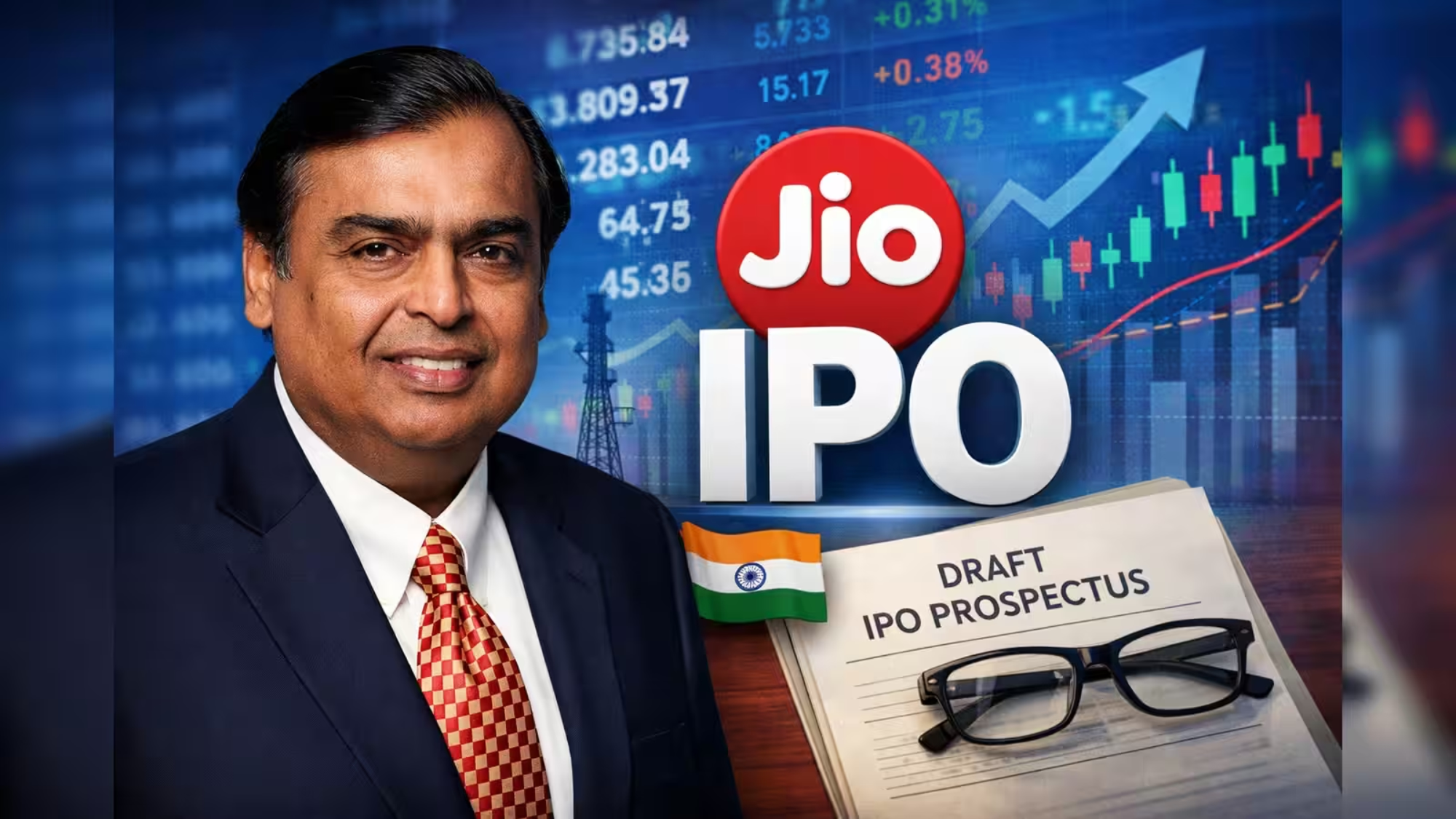
Most people are looking at the wrong thing.
524 million subscribers. ₹38,000 crore raise. India’s largest IPO ever.
And 99% of the conversation is about telecom. ARPU. Subscriber growth. Airtel vs Jio. Price wars. But everyone is Missing the entire picture.
Here’s what’s actually being listed:
A proprietary end-to-end 5G stack
Jio is the ONLY telecom company in the world with a fully indigenous, cloud-native 5G technology stack. Not bought from Ericsson. Not licensed from Nokia. Built in-house. That stack is now being offered to global telecom companies.
6,817 patents — and counting
Jio just entered the WIPO global top 20 for patent filings. Covering 5G, 6G, AI-native networks, edge intelligence, and cloud platforms. Across India, US, Europe. India’s largest patent holder in 5G/6G.
JioBrain + JioAICloud
An AI platform being deployed across network planning, enterprise services, and consumer apps. With 524 million users as the training ground. No US or Chinese AI company has access to this data moat.
The only private 5G play for Indian enterprises
Banking. Manufacturing. Utilities. Government. Jio’s enterprise 5G stack is the picks-and-shovels play for India’s industrial AI era.
A tech IP exporter in the making
Jio is partnering with global telcos to deploy its 5G stack internationally. India’s first real attempt to export telecom technology rather than import it.
For context:
When Meta and Google invested in 2020, they valued Jio at ~$60 billion.
The IPO values it at $130–180 billion .
None of them are selling a single share.That’s not a coincidence. That’s a signal.
The telecom business pays the bills.The tech IP, AI platform, and global 5G stack are what you’re actually buying.
Most retail investors will subscribe for the Jio brand.The smart money is reading the DRHP. Are you?